
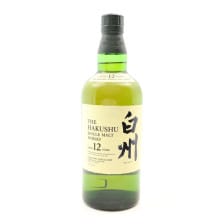
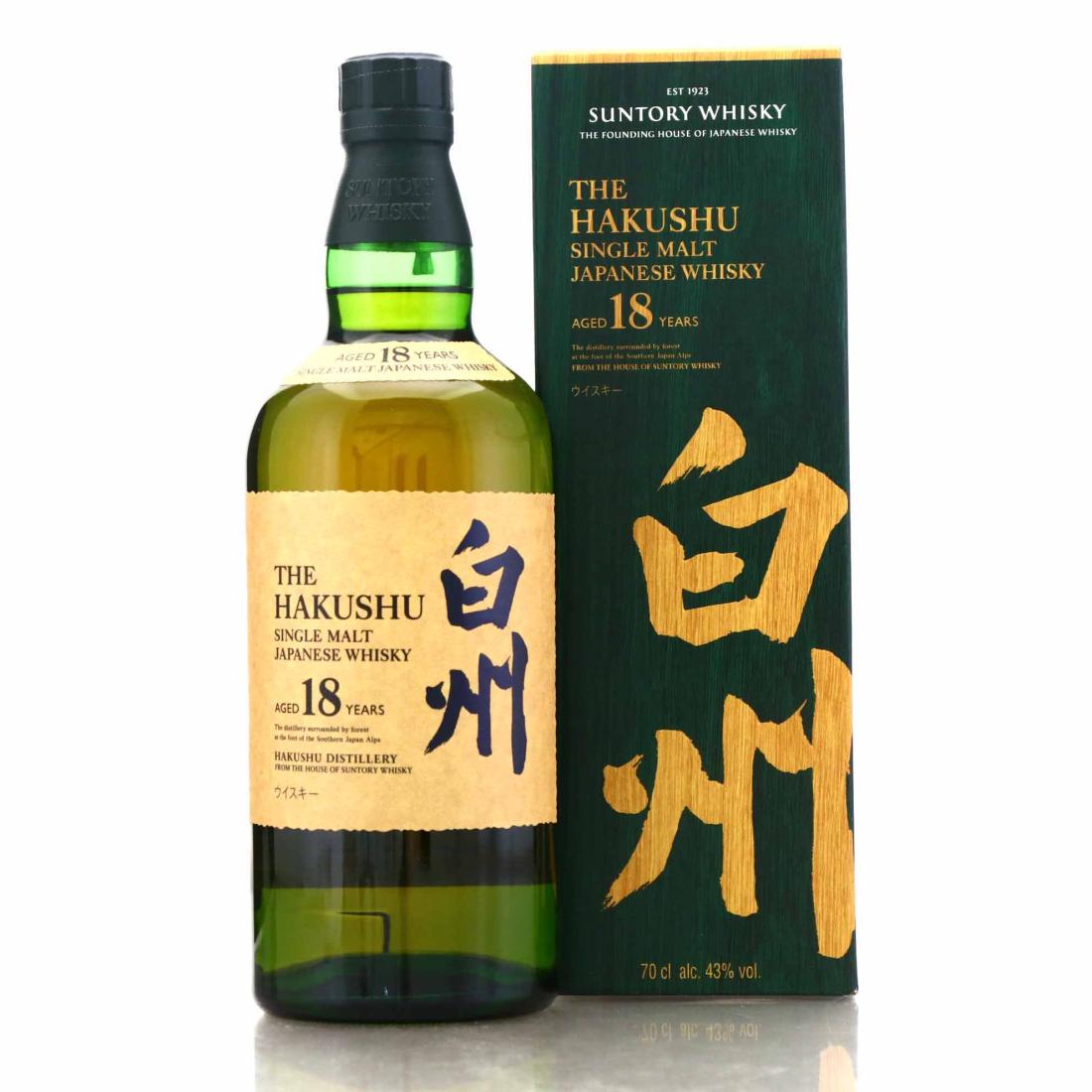
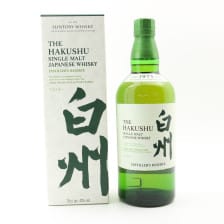
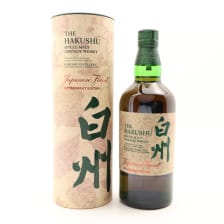
Hakushu, hidden in the forests of Yamanashi Prefecture at the foot of the Southern Japanese Alps, is Suntory’s “forest distillery” — founded in 1973 to complement Yamazaki with a fresher, greener house style. Its misty mountain water and occasional peated runs produce malts that stand apart in both flavour and auction demand.
Why Hakushu commands attention
Hakushu benefits from the same global Japanese-whisky tailwind as Yamazaki, but with a distinct identity: herbal freshness, light smoke, and forest-air character. Limited Heavily Peated editions add a collector angle that Scotch peat fans often chase at auction.
- Altitude and terroir — the distillery’s mountain setting shapes a lighter, more aromatic malt than many Speyside peers.
- Peated surprises — occasional heavily peated Hakushu releases trade as separate micro-markets with their own auction curves.
- Suntory portfolio depth — paired with Yamazaki and Hibiki, Hakushu completes the most recognised Japanese whisky brand family globally.
Core range vs limited releases
Collectors often split strategy: core bottles for stability (12 and 18-year-old), limited releases for upside and risk (Heavily Peated, single-cask, and older 25-year-old bottlings). In 2026, Hakushu remains a top-ten searched Japanese malt on Whisky Pricer.
Data tip: One /whisky/ page = one grouping. Search Hakushu shows every variant; a product page is only that line’s hammer history. For peated or limited bottles, search the exact release name.
| Expression | Market role | Collector note |
|---|---|---|
| Hakushu 12 · search variants | High liquidity | Core forest-malt profile; steady auction turnover. |
| Hakushu 18 · search variants | Premium anchor | Age-statement flagship; compare release years via search. |
| Hakushu 25 | Ultra-premium | Rare at auction; provenance critical. |
| Heavily Peated editions | Higher volatility | Limited peated releases — verify year and batch. |
| Distillery & limited releases | Collector focus | Single-cask and exclusive bottlings; each is its own market. |
| All Hakushu (search) | Full catalogue | Every grouping in one searchable list. |
Listing counts on each product card and search result reflect real UK auction turnover on Whisky Pricer — use those instead of generic “liquidity score” claims.
Expert insight for Hakushu collectors
- Know your peated from your unpeated — Heavily Peated Hakushu trades at very different levels to the standard 12; never compare unlike bottles.
- Verify release year — Japanese age-statement bottlings can change between releases; auction comparables must match the bottle in hand.
- Pair with Yamazaki for context — understanding both Suntory malts helps you judge whether a Hakushu lot is fairly priced relative to the wider Japanese market.
Frequently asked questions
Is Hakushu a good investment in 2026?
Hakushu trades consistently at UK auction, especially the 12 and 18-year-old. Limited peated and single-cask releases can spike after launch but are more volatile. Pair core age statements for liquidity with selective limited bottles if you track auction charts.
How does Hakushu differ from Yamazaki?
Hakushu is often described as fresher and more herbal — reflecting its forest setting and higher altitude. Yamazaki leans richer and more sherry-influenced. At auction, both are sought-after, but they attract slightly different collector profiles.
What are the most collectible Hakushu bottles?
Beyond the 12-year-old, collectors watch the 18 and 25-year-old, Heavily Peated editions, and older distillery-exclusive bottlings. Search the exact name on Whisky Pricer, then open its product page for hammer history.
Why does one Hakushu product page show fewer sales than search?
Each /whisky/ URL is one auction grouping. Search lists every Hakushu variant — release years, peated editions, and NAS specials. Always match the page to the bottle in your hand.
Guide updated: June 2026. For live UK auction pricing on Hakushu, use live auctions, trending whiskies, or search from the homepage.